Featured post

How do they compare? A close look at TED-ED Lessons, EDpuzzle,and Playposit (fka EduCanon).

Students love videos. Teachers love videos.  We ALL love videos.  And, for many of us, we learn so much better if we can see  what we ne...

Monday, 22 June 2015

It took a village...and a lot of passion!

This is about a dream. A crazy, big, seemingly impossible, personal passion of a dream that came true.  

And it took a village.

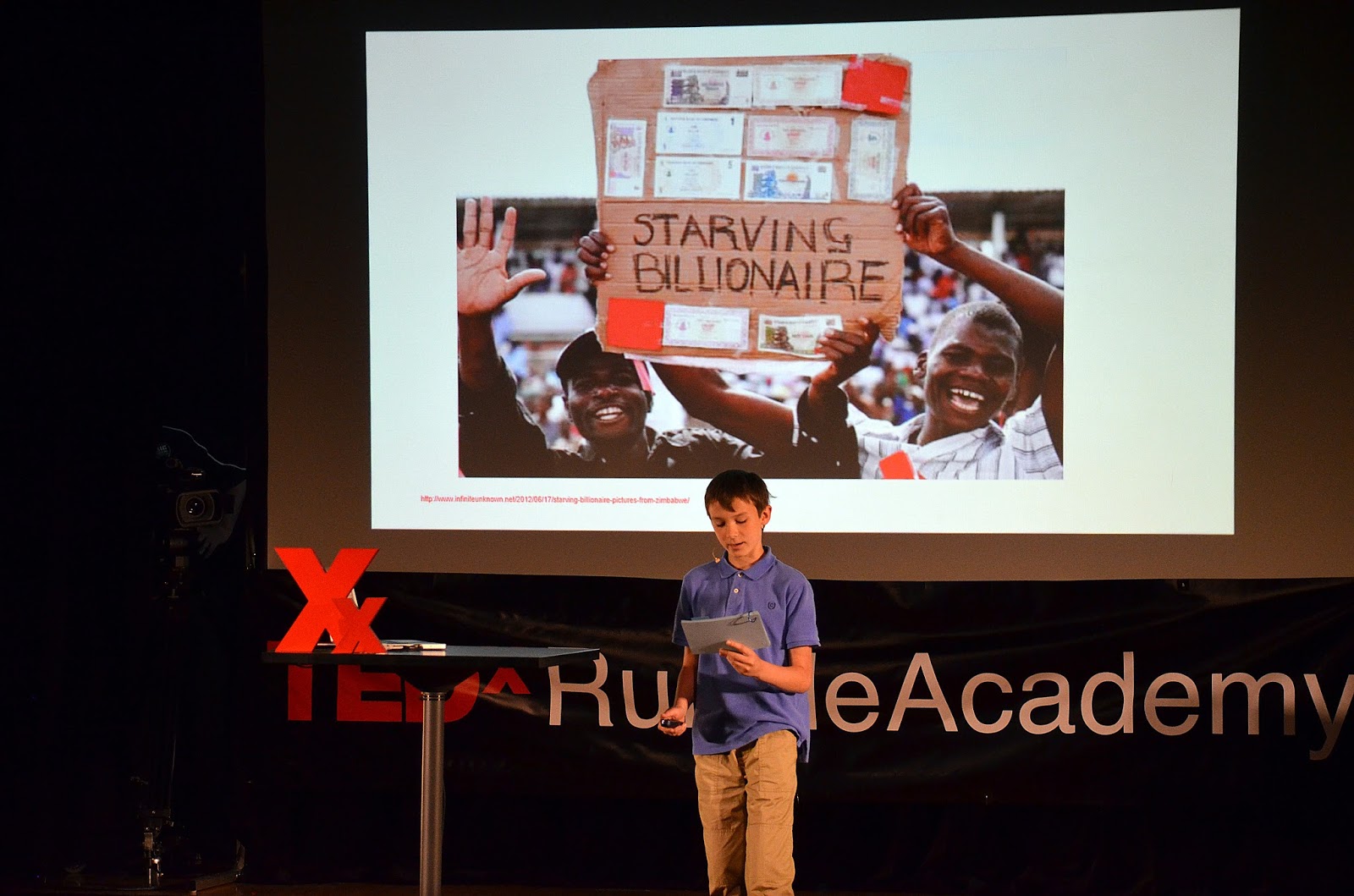
That village included 140 wonderful members of the Rundle Academy community, who, because they believe in the magic our little school works on a daily basis, came out and gave their heart and soul to TEDxRundleAcademy's inaugural event and the rest is, well, history. 


There is much written about how to organize and curate a fabulous TEDx event for your community. There are ample resources, examples, and legions of engaged, innovative TEDx'ers out there who will bend over backwards to help first-timer's out.  But, what about writing about the collaborative energy and spirit it took for such an event to occur? 

What about writing about how to launch an academic club that involves reading, writing, and public speaking in a school where every student struggles enormously with those aforementioned learning tasks? 

What about writing about how, back in October, I had to practice entrepreneurship beyond my wildest dreams to get our TED-Ed Club off the ground.Or, how about writing about realizing that you now are the curator of a TEDx event and you have the monumental task of creating the vision of an event that just seems so impossible. 


Or, how about writing about how liberating it was to realize, a few months in, that the voices  of our TEDxRundleAcademy,  despite how unpolished, young, and nervous they might be, would be and will continue to be primarily the voices of the students who attend our school.  We might never get a talk onto TED.com, we might never go viral, but our talks will always represent the heart, soul, spirit and mission of our community which is to make learning and dreams possible for students with often very challenging learning disabilities.


 How about writing about how frightening and exhilarating  it is to open up your very private dream to your entire staff and trust completely that they will take that dream and run with it and then see the utter magic that they create? 

How about writing about the hours and hours of time put in by so many people so that TEDxRundleAcademy could happen?  


How about writing about the incredible effort and grit that 7 young speakers demonstrated over the last 6 months? None of these students find writing or public speaking easy. Many of them were incredibly scared and constantly dealt with nerves and anxiety about our event but they believed in themselves and did it. 


How about writing about the tears that ran down my face on the day before the event, when as I  walked down the hallway and saw, for the first time, that everything would come together; that my students, colleagues, and parents totally and utterly believed in and were excited by my vision. 


How about writing about the incredibly deep feeling of satisfaction and joy that your students LOVED every moment of the event and can't wait until the next one. 


That was the day when 15 years of teaching came together. I realized that everything I  had ever done professionally was coming together at the right moment with the right people in the right place and that THIS was that moment by which I might later define my career. 

Sometime you dream big, and your dreams as a teacher are often gigantic. And, you hope more than any thing that those dreams come true, because, after all, they are the dreams of your students.  And those dreams matter. 


TEDxRundleAcademy gave a voice to those dreams. 


Wednesday, 20 May 2015

2 Days and Counting.


It's almost here!  Wow! The halls of Rundle Academy are buzzing with excitement and and the whole TEDxRundleAcademy team is busy setting up, preparing, practicing, decorating, compiling, problem-solving, and embracing the craziness that comes with putting on a conference event of this magnitude.  

As the curator, I cannot even begin to express how exhilarating it is to see everything come together.  And, when you find yourself only 2 1/2 days away from the BIG DAY, you can't help but marvel at all it took to get here.

Top 11 List of What it Took:

1. A passion for the TED organization and ideas worth spreading.
2. A ridiculously grandiose dream.
3. Establishing a TED-Ed Club.
4. Convincing teenagers that an academic club is a fun thing to do when they could be going off campus instead.
5. Students beginning to believe in themselves.
6. Applying for a TEDx License.
6. Realizing that the whole school is along for the ride.....could not ask for a better team.
7. 6 months spent developing and curating our speaker program (convincing both students and adults alike that public speaking is not worse than death).
8. Learning a variety of skills we never thought we would ever need. ( I can now embed code and manipulate code???!!!!).
9. Realizing that it is more than okay to ask for help. (How else do you move a mountain?)
10.Gratitude, patience, hard work and the happy realization that it will worth every minute.
11 The realization that your spouse and mother  and colleagues probably should get all of the credit.

In the spirit of collaboration, here is a TED Talk that effectively sums up what a monumental, collaborative undertaking needs if it is to succeed.


Friday, 13 February 2015

Celebrating Diversity of the Mind: Five Ways to support Exceptional Learners


Let's celebrate diversity. Not diversity of cultures, race or religions. Not diversity of teaching practices, but diversity of minds and five actions that a strong and supportive family and school can do to nurture students who, as exceptional learners, have a diagnosed learning disability.


But first, why do I care about exceptional learners; those kids who are the definition of diverse minds? Well, working as a teacher in a Learning Disabilities Academy puts me front and centre into the world of diverse minds and the incredible gifts these children possess.  These students are as intelligent as their peers, but, for some interesting twist of fate and brain development, the way they learn, process information, produce ideas and interact with the world,  is markedly different from many other children.  They come to us often utterly defeated by the school system and their own difficult, if not impossible, effort to fit in.  They come to us scared, withdrawn, or spitting mad. They were often the kid that the teacher and other kids didn't like, they were the discipline case, they were the invisible child at the back of the classroom so quiet the teacher hardly notices their presence, or they were the social butterfly or jock who use bluster, bravado and popularity to hide the fact that learning is hard for them.  

And, unfortunately, sometimes these children come to equate a learning disability with the inability to learn; with an inescapable fact that they might never be successful.  I think that for those who are still struggling to come to terms with the uniqueness of their own learning, it is so very easy to see a learning disability diagnosis as a terrible thing:  a label, a sentence, a definition.  

I don't see it that way.  

But what I will acknowledge as a hard truth is that is is often the side-effects of those learning differences that are far more debilitating than the dyslexia, dyscalculia, or dysgraphia your child has. I truly feel, that if the learning challenges are appropriately addressed , than every child with an LD code is going to be successful. But, so often this is not the case and then, it is the anxiety, the low self-esteem, the aversion to taking risks in learning, and the fixed growth mind-set that the child embraces, that are far, far more harmful to the child's future as a learner than the learning disability itself. 

I look at my students and I see how five important actions celebrate and acknowledge their exceptionality and diversity of mind.

1.  Early identification 
If you or your child's care provider notices anything that seems to particularly different about how your child learns or interacts with the world, see your doctor. Talk to your child's teacher.  Do some reading.  Listen to your "gut", don't dismiss your child's kindergarten teacher as an idiot, don't hate your mother-in-law who might have made an unsubtle comment.  Be proactive and get your child assessed. A comprehensive ed-psych report will go a long way in helping you and your child understand exactly what your son or daughters' strengths and weaknesses are.  Here in Alberta,   students who have a learning disability will not receive any kind of  meaningful help if their learning challenges are not identified by a registered educational psychologist.  Once a specific learning disability is diagnosed, coding and funding begin to fall into place and then, and only then will your child receive the help they will need to succeed; help such as access to a learning strategist, pullout time,  remediation, accommodation and differentiation. Early identification and meaningful supports can do so much to eliminate so many of the side-effects mentioned above.

2. Accommodations.
Accommodations level the playing field for students with LDs.  They are not a crutch and they are not "cheating".  Diverse minds access information and demonstrate learning in many, many ways. Accommodations recognize differences and  learning challenges and give your child a fighting chance.  Accommodations range from extra time, use of assistive technology like speech to writing software, consistent use of a laptop or iPad, sound-diminishing earphones,  note-packs, digital copies of textbooks, exams on different coloured paper, exams with significant amounts of  white space and audio versions of all assessment materials.  These things might seem so simple but if, for example, you are dyslexic, having all of your texts, assignments, and assessments available as an audio file is the difference between failing all of your subjects (because even math requires a student to be able to read a huge amount of material) and passing  all your subjects. And, achievement aside, how do you function and thrive in this current information age if you do not have the tools that enable you to access, interact with, and produce that information?

3. Differentiation
Your child is blessed with a beautiful and capable brain.  It is not broken, it just accesses, processes and  retains information differently. Your child's teacher's job is not to "fix" them, but rather, to help them develop the ability to learn despite their exceptionality using, literally, every strategy and tactic at their disposal. Yes, it is true that if diagnosed early, a great deal of remediation is possible,  especially with dyslexia, but how a child learns is uniquely them and is something to embrace, not rail against.  That is why I am a such a great proponent of differentiation.  Differentiation is mindfully examining instructional and assessment practices and personalizing  one or the other (or both) based upon the needs of the child. It is one of the most respectful acts of pedagogy as differentiation is the explicit acknowledgement that your child is exceptional and therefore deserves a personalized education that best suits his or her needs.   However, it is vital that parents and teachers understand that differentiation is not modification of curricula or assessment.  A child with an LD is more than capable of excelling within the parameters of standardized curricula, but will shine even more if their teachers understand that how they deliver the curriculum will often make the greatest difference. It is also important to note, that differentiation is not a total re-shifting of a classroom and a teacher's pedagogy.  Often times, small tweaks make more than enough difference. I consider it mindful teaching.  Sometimes, I do have to radically rethink a lesson, and sometimes, everyone can cope simply because I provided an audio file of the novel we are reading or I made sure the notes for the lesson were up on Moodle or I give the students the choice between writing down a response or recording it using digital tools like Audacity, Voice Memo or Croak It.

4. It takes a village....
Andrew Solomon, in his talk Love, no matter what  tells the truth that "Ironically, it turns out, that it's our differences, and our negotiation of difference, that unite us".  In the world I work in, it is never just one person who makes the difference in a child's life.  It is never just one person who takes that child from academic failure and/or challenge and brings them into the light.  And, because every person in my building is  a hand-selected, active and willing participant in a collaborative, innovative, and supportive environment, we "negotiate" these differences together because we are all on the same page. I cannot stress how important it is that this village, this school be united in a singular purpose, but that the inhabitants be permitted to achieve this purpose in what ever manner they know will best suit the student, for modelling how to embrace the diversity of minds is far more powerful a teaching act than simply extolling their virtues.


5. And a whole lot of TLC.
When working with exceptional learners in a building where daily, we celebrate the beauty of diverse minds, it takes a teacher not only well-versed in the technical/theoretical aspects of pedagogy, but also a teacher who brings a lion's heart filled with empathy, kindness, tenacity and, hope to help a disengaged, challenging child with no belief in themselves  find and revel in what the delightful Rosie King calls their brilliant individual light. It's hard work, it's emotional work, it's exhausting work.  But, for those of us who work and learn from exceptional students, for those of us who have come to marvel at the sheer wonder of their diverse minds, it is work that is fulfilling and important.  It is fulfilling because we give hope. It is important because there are no greater gifts an educator can give to a student than the ability to shape their own future.

Come, let's re(vision) our pedagogical practices together so that the exceptional learner comes to the empowering conclusion that no matter what the diversity of their mind, they are capable of learning.


Monday, 1 December 2014

The Hardest Question of All. . .


"Will my child be okay?" is hands down the most difficult question a parent can ask.

It's so difficult because, when a parent asks this question, there are often really complex issues driving the query.  Issues that do not have, and will never have, easy and pat responses.

And, I personally feel that the only teachers who are permitted to respond with a resounding yes to such a question are those who are brand new to the profession and have yet to develop the ability to respond to such a question with insight and plausible, workable solutions; who have yet to develop the confidence and insight that would enable them to answer "Yes, but. . .".

I also think that this is a question that reflects just how difficult it can be to raise a child, let alone a child who struggles .  A parent doesn't ask this question of just anyone.  They must truly feel (or expect) that, as teachers, we CAN fix the problems their children are experiencing; that we have the skills and knowledge to HELP. It is this incredible level of trust, perhaps even blind trust, or, probably more accurately, fear that their child isn't going to be okay,  that makes this question even more challenging.

So.  When I am asked to respond to this question what do I do?  What do I say? Well, I hope my response is guided by the late Rita Pierson whose mission in life was to find a way to help EVERY child learn and fulfill their potential.

I hope that my response, although guarded, is always hopeful.

I hope that my response highlights the strengths of the child.

I hope that my response honestly takes into account the child's challenges.

I hope that my response offers up plausible, actionable, possible solutions.

I hope that my colleagues and my administrators can  diplomatically voice our misgivings,  find common ground, and then work together to bring these solutions to life.

I hope that my response is taken in good faith, as I don't know everything.  I can only work to find solutions. I can only base my responses on what I see and know from my daily interactions with the child in question.

This leads me to another aspect of my response to the question "Will my child be okay"? Many times, there are things the child can actually do.  I love this quote.  In my classroom, I can always provide learning experiences that are interesting and personalized.  I can learn as much as I can about a student's learning preferences and style, I can be their champion and let them know daily that I believe in them, but at some point, a child who struggles is going to have to decide for themselves whether or not they are going to  be an active participant in their learning journey, instead of letting themselves be victimized and defined by their challenges.  This lesson is hard and not always palatable, but it has to happen.  In such a situation, though I hope:

That the child's voice will be heard.

That the child's own fears, misgivings, hopes and dreams will be taken into account and respectfully integrated into the proposed solutions.

That the child's needs supersede the expectations either explicit or implicit that I, the school, or the parents might have.

And finally, (and so many of the parents I have the privilege of working with do this with so much grace and aplomb that I marvel each and everyday), I can only respond to this difficult question when the partnership between myself and the child's parents is open, honest, and based upon mutual respect. Revisioning a child's path involves: finding solutions, building confidence and self-esteem, enabling learning, supporting curiosity, and looking towards a positive and productive future.  Those are my goals as a teacher.  But, without an entire team working together to engineer actionable solutions, I cannot  respond appropriately to the question posed by the concerned parent.

When we all work together as a team.  When we are  a kind and caring community,  when we look past marks and standings, when we stop pointing fingers and making excuses, when we sit down with our all our cards out in front of us and honestly express our hopes and fears, THEN, together, as a team we can all say "Yes, absolutely" to the most difficult question of all.

All students have LearnAbiltites. Let's make sure we give them what they need.


Sunday, 17 August 2014

Changing the composition of the soil: helping students see connections and possibilities through gardening, making and social activism


We have two aspects to our adult lives: our vocation and our advocation. The former pays for life, the latter makes it all worth it. Education, with vision and purpose, makes both possible.


I garden to feed my soul.  The fact that I also can feed my belly is an added perk.  Like all of those who put seed into soil, I find something utterly rewarding in watching my efforts come to fruition.  And, as a teacher, gardening seems to be an apt metaphor for so much that we do as as a recent #TEDEdChat on Ron Findley's Ted Talk  revealed.  I don't want to rehash every metaphor we explored, but I do want to speak towards the very powerful metaphor found in Findley's talk A guerilla gardener in South Central LA and how it relates to a fundamental purpose of education: helping students learn the skills and mindsets that will enable them to productively and meaningfully contribute to the communities they live in.

In his talk, Findley reveals how "I have witnessed my garden become a tool for the education, a tool for the transformation of my neighbourhood. To change the community, you have to change the composition of the soil. We are the soil." How can we as teachers change the composition of the soil so that we have fertile ground for life?  Let me suggest 5 ways:

1.  Eradicate poverty by ensuring the education that every student, in every school around the world, gets will enable them to be meaningfully employed for life:  Once again, developing strong skills in literacy, numeracy, science, and the social sciences probably is the best way to ensure that students have the basic skills and the learning skills needed for post-secondary (and I don't just mean university).

2. Create the kinds of lessons, units, and programs (hopefully interdisciplinary in nature) that give students the ability to solve novel, authentic, real-world, real-life problems using the skills they have acquired in all their courses.

3. Let them make mistakes, but ensure that you provide them with the supports to learn from their mistakes. If you want to change the composition of the soil, students are going to need grit.

4. Let them learn how to make something.  What is wrong with students knowing how to do an oil change, build something, cook something, sew something, fix something, create something?  The Maker movement speaks to something almost primal in our pyscholological make-up. The skills students learn in these environments just might be the avocation that gives purpose, excitement and flow to their lives for years and decades to come.

5.  Playtime.  Have as many different kinds of clubs and extra-curricular programs as possible in school.  Sports are vital, but, so is the crochet club, the manga club, the take-it-apart-and-put-it-back-together club. Even in high school, we need to help students learn to create balance in their lives.  Students with avocations are more likely to develop the skills that help them stick it out in their vocations.

So.  I have just given myself work for life!  Over the next year, I want to explore how I can help my students improve or optimize the composition of their soil.  And I don't think that academics is the only way.  I have spent more than half of my career in schools were many of my students will not go to university and will not have white-collar jobs. They will work with their hands and be active participants in society.  They raise families and pay their taxes.  But I am also very mindful that the last 10 years in North America has clearly highlighted how both these white-collar and blue-collar jobs that were once deemed life-time vocations are not as secure as they once were.  So, this brings me to my next point.

Education today must give our students the ability to be life-long learners with one more spectacularly important skill: the ability to see connections and possibilities that do not seem to exist.  And that is were I think we need to focus far more upon the connections between the disciplines; upon the fact that in life, rarely do you just use one skill to solve a problem.

I'm a big fan of Gever Tully and his Tinkering School: Life lessons from tinkering and 5 dangerous things you should let your kids do.  Gever Tully thinks that we need to let kids just get dirty and make things.  In doing so, they learn a lot, make many, many mistakes, probably cut themselves, and use skills from all of the disciplines to solve problems.  As a mother, watching my young children do this daily in our backyard, I'm scared silly, but it also fills me with awe. Children are natural makers and problem solvers and, when we cut up learning into isolated disciplines, we slowly kill that innate ability.

So out of all of these observations and ideas, I have a suggestion for a interdisciplinary, inquiry, project-based unit centred around the idea of gardening using Findley's notion that gardening is all about changing the "composition of the soil" and Tully's idea that there are  "simple things that we can do to raise our kids to be creative, confident and in control of the environment around them".

I'm going to call it "Life Gardening" (hopefully my students can come up with a much more inspiring and hip name) and I want to use it with our grade 7s.  We recently received a grant from the BP A+ For Energy program  http://www.bp.com/en/global/aplus-for-energy.html that will enable our school to build a greenhouse.  Initially, the grant was for grade 7 science and in particular for a single unit "Plants for Food and Fibre",  but I see the potential for something much bigger within that grade.

I'm toying with using Ron Findley's talk as the central text and then bring in math, science, language arts, social studies, food studies, art and music to create a 6-8 week learning experience that will not only help students master the skills and knowledge of grade 7 science, but, more importantly, help them make connections within all of their classes.  We might end up growing the plants that the First Nations people were cultivating in pre-colonial times here in Canada,  or honing our informational text skills by researching and reading about gardening, or donating our produce to the homeless at our local drop-in centre, or holding a fundraiser for materials to continue once the funds from the grant are used up,  or becoming politically engaged so that our environment can continue to sustain and feed all of the citizens of our planet,  but those are all big steps in making Grade 7 Social Studies, Language Arts, Math and  Science more relevant and real to a group of students who might, otherwise,  not be able to see the connections between those disciplines; who otherwise, might not be able to see early enough that all of life is connected in some meaningful and compelling way.

And, hopefully, in the end, the final result will be a dedicated and devoted group of kids who grow up to not only be avid gardeners,  with meaningful and productive careers in related fields, but adults with an advocation and passion for social justice that was ignited by the lessons they learned this year in a small greenhouse on the playground.

Talk about planting the seeds for the future; talk about changing the composition of the soil.

Come, let's revision our pedagogical practice together.


Wednesday, 9 July 2014

Leader's eat last: a nod to Simon Sinek, strong leaders, and the power of collegial environments.


Effective leaders with vision have one truly great skill: they are able to see past their own "importance" and build an environment that supports authentic collegiality. 


If you are observant,  Graduation banquets tell you a great deal about a school.  


When done well, with attention to a school's core values, with attention to the true purpose of such a celebrations, Graduation, whether is is for Kindergarten, grade 6, grade 9 or grade 12 is a truly moving experience. 


But this post, although inspired by what recently happened at my school's grade 9 graduation ceremony, is not  about grad at all.   It is, instead,  about a small gesture I took note of, probably not noticed by many, but one that spoke volumes to me. The gesture was the simple act of the attendees at one table who willingly and graciously chose to eat last.  


At that table, all of our school leaders.

  
Which brings me to the point of today's post.  What makes a great educational leader and how this question of leadership is the single most important factor in a healthy, innovative, collegial, collaborative, and, most importantly, a SAFE  school environment.

According to Simon Sinek's TED Talk Why good leaders make you feel safe, good leaders eat last.   This concept of eating last comes from the the Marines and how the leaders always ensures that his or her troops eat first.   Sinek relates the story of the remarkable Captain Swenson who willingly endangered his own life to save the lives of many of his own wounded soldiers.  And Sinek logically thought that perhaps Captain Swenson was only remarkable because he naturally was that kind of person, but, Sinek revealed in his TED talk that  "it's the environment, and if you get the environment right, every single one of us has the capacity to do these remarkable things, and more importantly, others have that capacity too".  


Amazing and effective  leaders create safe places where their employees can literally DO their job.  It seems so simple.  And, when you have the pleasure of being in such an environment, you don't realize it at all.  That's the problem with great leadership.  If it is done well, everyone thinks they can do it.  How hard can it be?  But, just wait until you work in a school or organization where someone has "power" and doesn't know how to use it.  Then, all of a sudden, it becomes crystal clear what good leaders actually do, and, how hard it actually is.  


Furthermore, those of you who have been following (Re)Vision It  have probably noticed that I write a great deal about fear.  Usually I write about fear from the perspective of my students, but this time, I feel I have to write about fear from the perspective of a teacher.  

In my chosen profession, there can be a lot to fear: parents, narrow, un-inspired curriculum, the political machinations of the current zeitgeist,  standardized testing that is punitive in nature,  lack of funding, lack of job security, and, let's not kid ourselves, even the students.  These are all very real fears and I don't think that there is a teacher out there who hasn't had their knees shake at one time or another regarding some the aforementioned issues, but perhaps the most frightening scenario a teacher can come up against is that of poor, ineffective, narcissistic leadership.  


Effective leaders with vision have one truly great skill: they are able to see past their own "importance" and build an environment that supports authentic collegiality, collaboration, growth, divergence and risk.  Narcissistic leaders can never let go of their own self-importance long enough to see that collegiality, collaboration, growth, divergence and  and risk are not a direct affront upon their own agenda and/or need to be at the centre of all  attention. 


Effective leaders see what needs to be done, know what the problems are, see their staff's myriad abilities, assign tasks and roles, and then let stuff get done.  They help direct.  They help shape.  They help solve problems as they arise.  But, they know that they can never do it all by themselves.  And that  takes humility and humbleness and a true desire to get it right.  Not because the leader wants the glory, but because he or she not only cares deeply about the organization they work for; he or she cares deeply about the people behind that organization. 

Which brings me back to fear.  If a teacher has reason to fear or not trust their leader this is what happens:
They retreat.  
They stop growing.
They atrophy.
They second guess their abilities.
They put themselves first.
They become silent.
They focus upon the negative.
They spend more time on their exit strategies than on their day-to-day tasks.
They don't open up. 
They close their door. 
They hate their job.
They stop trying.
They count down to the next holiday.
They lose sight of the bigger picture.
They stop having fun.
They don't connect.
They don't mentor.
They teach to the test.
They disrespect leadership
They stop caring.
They come late and leave early.
They just do what they have to do.
They do too much.
They cry too much. 
They don't cry.
They form cliques for protection.
They don't share.
They mistrust everyone.
They develop a herd mentality of us vs. them.
They believe nothing will ever change.
They lose faith.
They don't fulfill their innate potential.
They quit.

If, as according to Sinek, the environment makes or breaks an organization, this is most definitely not the kind of environment you want, especially in a school. 

What is it like to work in such a place, with such leadership? A never-ending desert. 

What is it like to work in a place where your leaders "eat last?"  Well, its like you've just come out of that never-ending desert into an oasis where someone hands you a tall glass of cold, clear water.  

When you no longer fear, when you are no longer thirsty, when the environment you work in feeds you, when the leader you report back to treats you with respect and autonomy, you, as a teacher, will and can move mountains.  But, most importantly, you emerge from your shell and join the group collective.  You begin to contribute to the whole.  You become part of the solution instead of a hapless, helpless victim.  You bring agency and verve to your classroom where YOU are the leader. 

That for me is probably the single greatest cost when a teacher is fearful because of poor leadership: they themselves cannot be the kind of leader students need.   


George Couros, a superb and forward-thinking Canadian educator recently wrote an interesting post on his blog The Principal of Change entitled 5 Characteristics of an Innovative Organization.  In this post, Couros wrote that effective leaders create safe and collegial learning environments when they focus upon:

1.  Promotion and modelling of risk-taking,
2. Competitive-Collaboration,
3. [Being] Proud of where [they] are, but know [they] have a way to go,
4.  Sharing,
and
5. Relationships, relationships, relationships.

Is this not what we as teachers strive to do each and every day?  Are we not leaders in our own right?  Do we not have a responsibility to ensure that we also create an environment in our own classrooms that echo the environments we want in our staff-rooms?  

I was so tired of being afraid as a teacher.  And, whether or not the fear I perceived was real or not, it consumed me.  This post has been very difficult to write.  I want to dispassionately reflect upon what fear  did to me and what it does to my colleagues for whom I have enormous respect.  I hate it when I see people hurt. 

Together, let's revision our pedagogical practice, so that we can help shape students into  leaders who know how to create the kinds of environments where, even though they eat last, they are sustained by the respect and admiration of those they lead.  

School needs no more fear. 


Monday, 5 May 2014

Listening to your students: thesis statements, individualized prompts and essay review


I think we really need to listen to our students.  We have to sit back and just let them talk to us and share their story.  Let them tell us about themselves.  Give them the time and respect that all people deserve.  I think I learn more about my profession and what my responsibilities need to be when I take the time to sit back and soak up what my students say to me on a daily basis.  So, when my student Ellie, a grade 9 girl,  tells me "the ideas that we make today create the future for tomorrow", I listen.  After all,  Ellie is right.  Her voice IS the future. 

Case in point.  This morning my principal sat down and evaluated me.  It wasn't the greatest time.  I'm in the middle of final review for my province's standardized writing exam, the dreaded PAT.  My plan was to go over the structure of the thesis statement and how it controls the organization of the entire essay.  Not exactly scintillating material. 

However, it all went well. After 15 years, I think I've figured out how to teach the essay.  But the best part was instead of doing a mundane review exercise for thesis statements with a dull prompt from a previous exam, I gave my students individual, hand-crafted prompts that were based upon something I had come to know about them over the last few weeks. I spend a lot of time letting my students talk.  As long as they are reasonably engaged in their learning tasks, I usually mingle and float around with one ear tuned into their discussions.  I learn about their lives, their habits, their hobbies, their plans at the same time I'm peering over their shoulder reading their writing or offering feedback or assistance.  So, it dawned on me that if I wanted them to really engage with this dull exercise, the best way to do that is to create a task that appeals to them.

As an aside, the Expository Pillar (see Barbara Mariconda), a method for teaching the organization necessary in the essay format is not really a priority for any grade 9 student, but, the essay, perhaps more than any other form, especially now in a time when to be a published essayist/blogger is easier than ever, gives the ordinary person a voice.  I want my students to be able to communicate clearly and efficiently because having a voice gives you some power over your life and your future. 

I was pleasantly shocked at how well the whole experience went.  Even more shocked that my grade 9 hipsters, cool cats, and seemingly blasé young adults were actually touched that I went out of my way to hand-print them a prompt, put in in an envelope, and seal it with a sticker that reflected their personality. But the most rewarding part of the lesson was how their faces lit up, how they looked up in incredulity, and how some actually laughed out loud when they saw that their prompt was about something they liked or were knowledgeable about.  And, even better, the focus and effort they put into crafting their thesis statements and body paragraphs was remarkable. 

Thesis statements are hard.  Normally, students try to dodge this practise, but today, because I listened to them, they learned something.  And, come Monday, when they have to sit down and write their PAT essay, I have the sense that they will remember how to structure their thesis statements and body paragraphs.  Not that achieving a high standard on a provincial achievement test is the end all and be all of their existence, but being able to clearly and effectively articulate their ideas, give voice to their thoughts,  and craft their future is. 

Any suggestions?  Together, let's re(vision) our practice together!